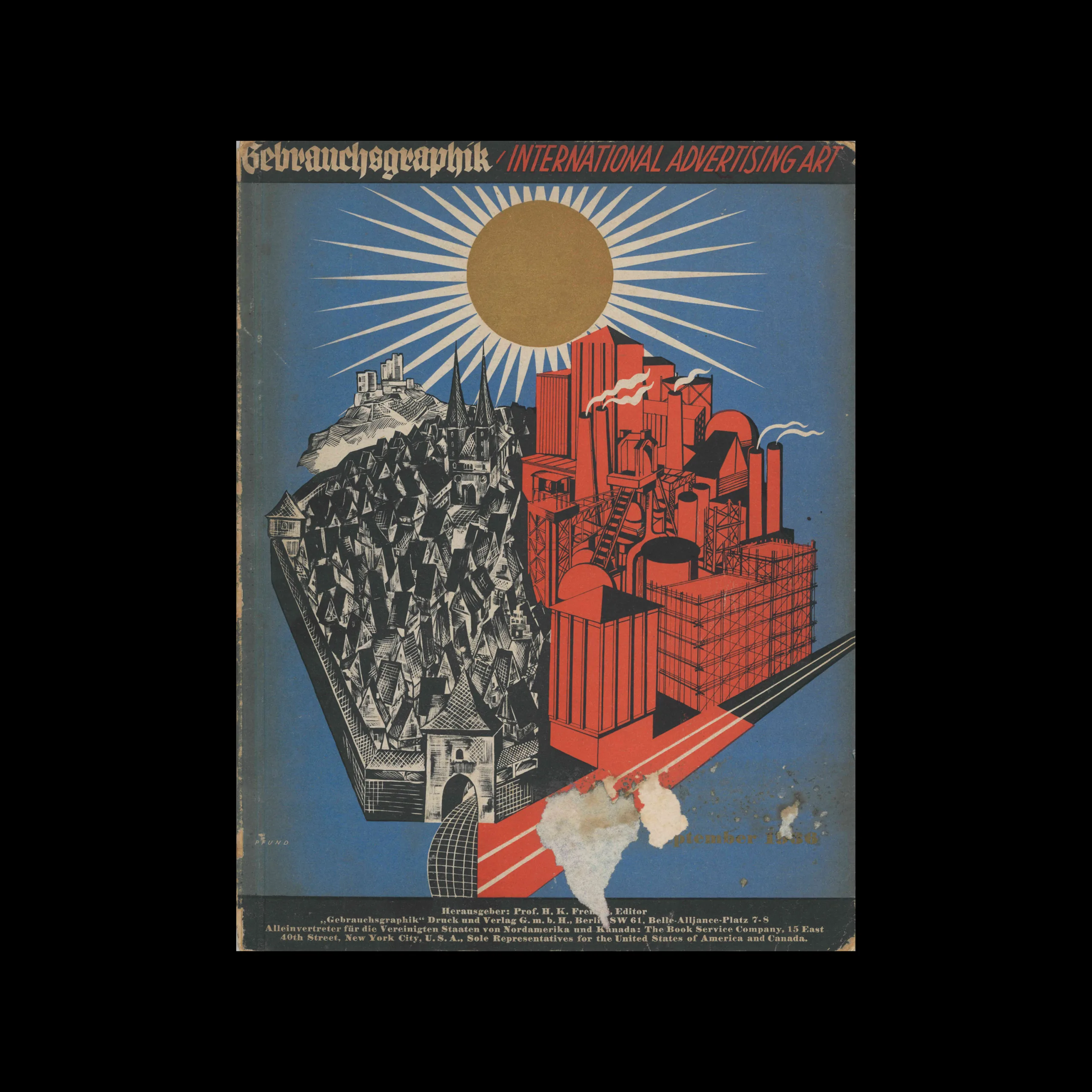


Advertising Design, Design Archive Feature, Members Only Content
Little is known about the designer Günther Heil. he established his graphic studio in Berlin and designed many advertisements for 8mm and 16mm film distributor Bruno Schmidt in the 1960s. These were created in the same era as the film distributor Atlas Films was sending films to art-house theatres and were hiring designers Hans Hillmann, Hans Michel, Günther Kieser, Wolfgang Schmidt and Karl Oskar Blase.
Read Article
In the ambitious new monograph Rational Simplicity: Rudolph de Harak, Graphic Designer, Volume shines a light on the complete arc of the exceptionally rich and varied career of Rudolph de Harak, showcasing his vibrant, graphic, formally brilliant work, which blazed a colourful trail through the middle decades of the twentieth century.
Read Article
Design Archive Feature, Illustration, Members Only Content
Little is known about the talented designer Günther Glückert. Born during the 1930s, a period that proved less than conducive to nurturing youthful artistic endeavours, did not halt Glückert's path of becoming a talented designer.
Read Article