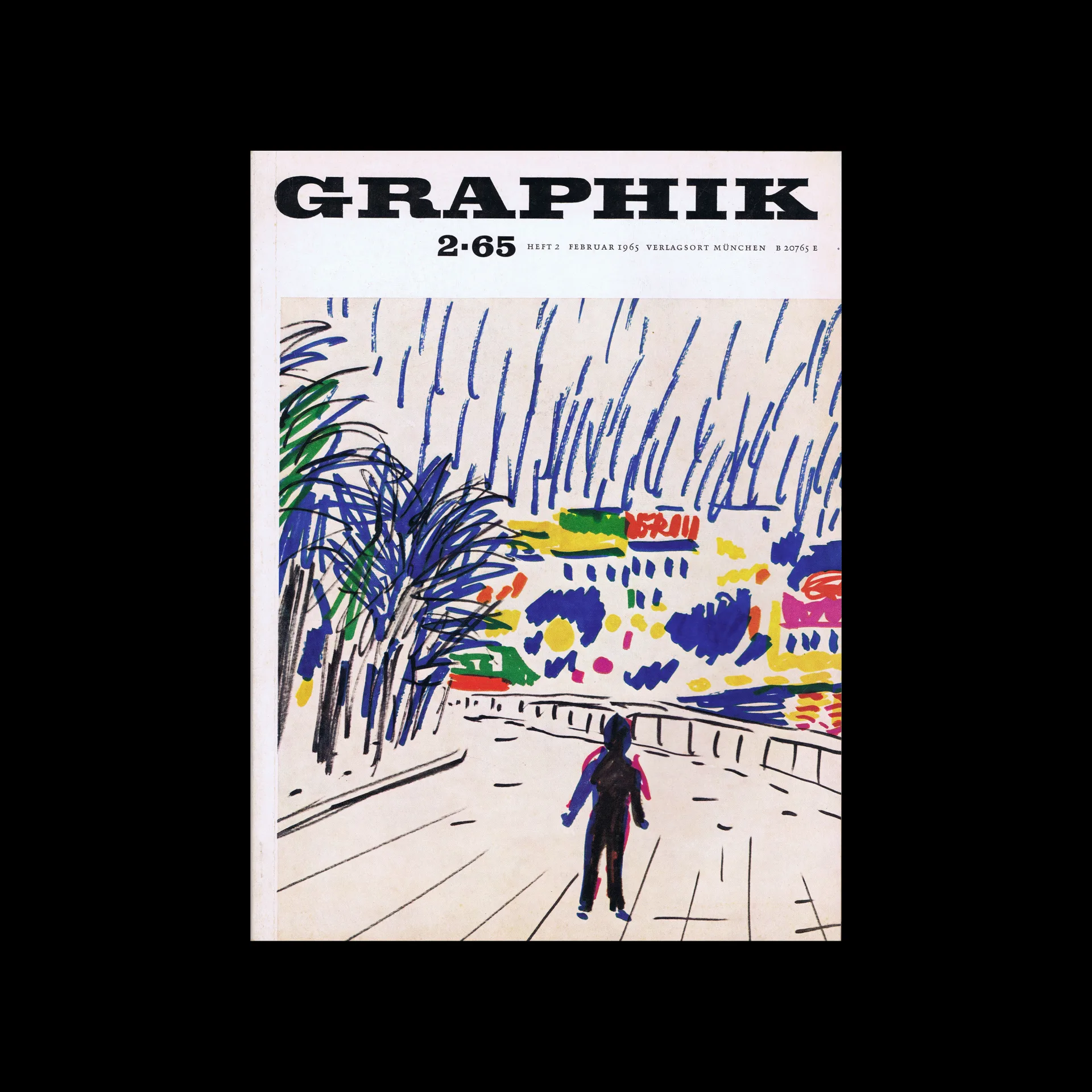

Graphik – Werbung + Formgebung, 02, 1965

Content includes:
Advertising Art
Hans SCHULTZ-SEVERIN- The Studio of an Expert
Japanese Commercial Art
Publicity Practice
Why Sponsors Change Publicity Designs
Elements of Marketing
The Working Group “The Coloured Newspaper-Ad”
Exhibitions
The EXPO I964
This and that
Who is Responsible for this Year’s Calendar?
Rosenthal-Designer RAYMOND PENET
Silhouettes
Japan is Worth a Flying Trip
Cascades of Light in Tokyo
GRAPHIK-Practice: Automatic Design of Dress-Models
GRAPHIK Special News
Advertising Picture-Atlas

Cover-Picture “San Remo” was drawn by AS, Munich.

Details

Graphik – Werbung + Formgebung
Graphik – Werbung + Formgebung was a German magazine published in the 1950s and 1960s,  focused on graphic design, advertising art, typography, exhibition/display design, and applied graphics.

Linked Information

Graphik – Werbung + Formgebung, 02, 1965
More graphic design artefacts
More graphic design history articles
The Art Deco Cover Designs of Joseph Binder

Advertising Design, Design Archive Feature, Designer Profiles, Members Only Content

The Art Deco Cover Designs of Joseph Binder

Joseph Binder translated machine-age aesthetics into refined Art Deco compositions. These magazine covers have become prime examples of American commercial modernism.

Read Article

Swiss Posters from the 1956 Best Poster Award (Die besten Plakate des Jahres 1956)

Design Archive Feature, Members Only Content, Poster Design, Regional Histories

Swiss Posters from the 1956 Best Poster Award (Die besten Plakate des Jahres 1956)

The best poster designs from Die besten Plakate des Jahres 1956 with a translated foreword by Jakob Rudolf Welti. Featuring the work of Herbert Leupin, Carl B. Graf, Carlo Vivarelli and Emil Ruder.

Read Article
Documenting the Arts and Crafts Movement

Magazines & Publishing, Members Only Content, Movements

Documenting the Arts and Crafts Movement

The Arts and Crafts movement, in particular its graphic design output is less documented than Art Nouveau and was primarily associated with Britain. Where Art Nouveau spread through international exhibitions and a shared decorative vocabulary that translated easily across posters, magazines and architecture, Arts and Crafts was rooted in British guilds, workshops and societies rather […]

Read Article