


Alan FletcherBob GillColin Forbes

Graphis 119, 1965

Content includes:
Louis Dorfsman, New York: Fletcher
Dione M. Guffey, New York: The Paper Shopping Bag
Jogn Massey, Chicago: Paper and Paperboard Promotion
Heiri Steiner, Zürich: Jan Lenica
Dr, Maria Netter, Basel: Second International Biennale of Tapesty Art
Varia: AIFA 1915 – 1965 / The Art Director Collects / Knauer Expo

Details

Fletcher/Forbes/Gill
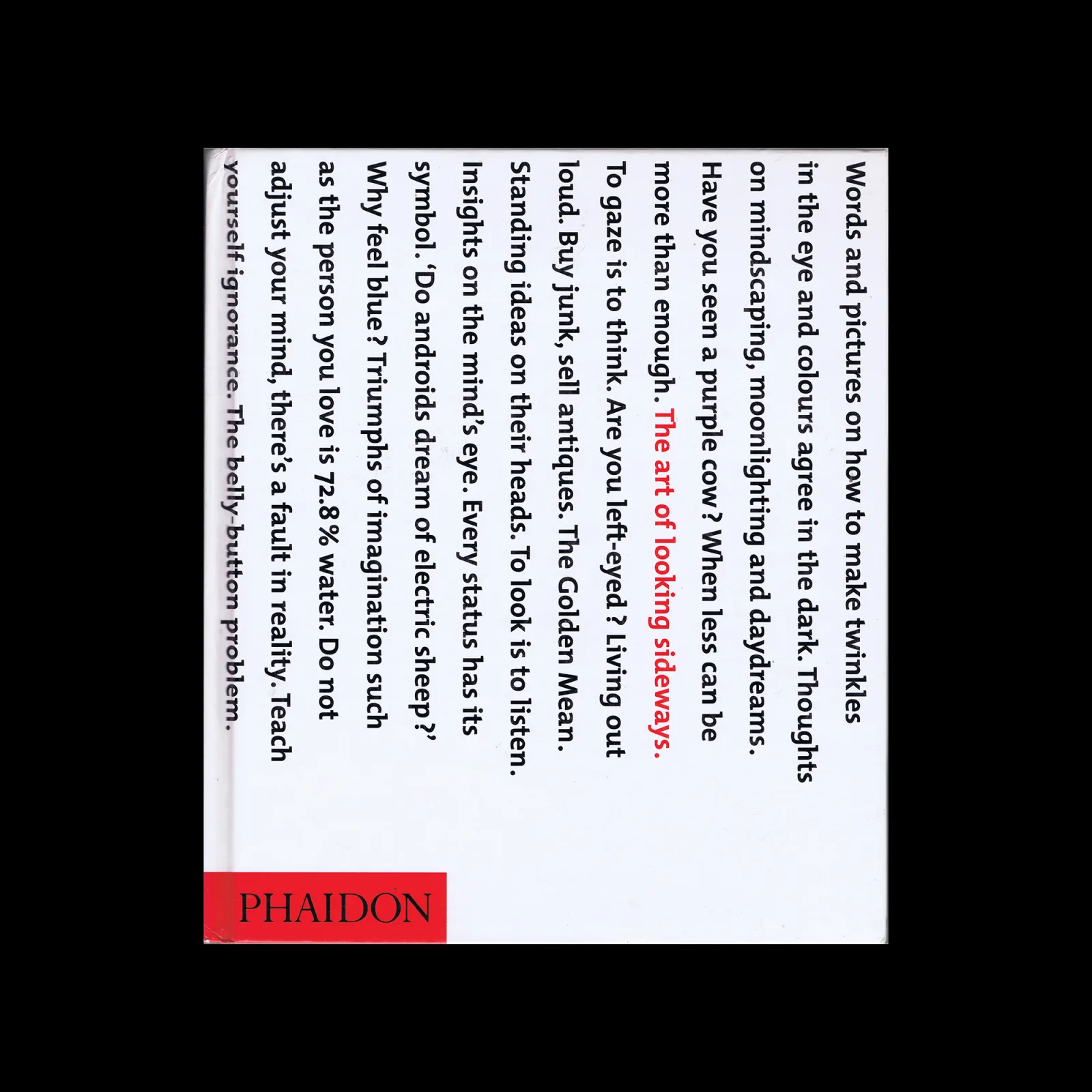
Alan Fletcher was born in Nairobi in 1931 and studied at the Central School of Arts and Crafts, the Royal College of Art and Yale. After working in New York, including for Fortune, he returned to London. In 1962 he set up Fletcher/Forbes/Gill with Colin Forbes and Bob Gill, which became Crosby/Fletcher/Forbes in 1965 and then Pentagram in 1972. His work was full of wit and ideas, from the Reuters and Victoria and Albert Museum logos to his book The Art of Looking Sideways (2001). He left Pentagram in 1992 to work independently and as art director for Phaidon. He died in 2006. The British Modernism section captures the movement he helped shape, while the United Kingdom archive reflects the broader design culture he worked within for much of his career. Browse the 1960s and 1970s decade pages to find work from the height of his influence.
Bob Gill was a co-founder of Pentagram and is known for his approach to problem-solving in graphic design, producing influential posters, books and teaching materials throughout his career. Explore related designers including Alan Fletcher and Colin Forbes. See also Fletcher/Forbes/Gill and British Modernism.
Colin Forbes was born in London in 1928 and studied at Sir Anthony Browne's College in Brentwood and trained professionally and artistically at the Central School of Arts & Crafts,. Forbes completed his apprenticeship as a design assistant to Herbert Spencer in 1952 and four years later he was art director of Stuart Advertising in London. In 1961, he joined Fletcher/Forbes/Gill up to Pentagram in 1972. Explore related designers including Alan Fletcher, Bob Gill, and Pentagram. See also British Modernism and Rise of Corporate Identity.
Fletcher/Forbes/Gill was a pioneering British graphic design partnership formed in 1962 by Alan Fletcher, Colin Forbes, and Bob Gill. The studio worked on corporate identity, editorial design, and advertising. The partnership dissolved in 1965 when Gill departed, with Fletcher and Forbes going on to co-found Pentagram in 1972. Explore related designers including Alan Fletcher, Colin Forbes, and Bob Gill. See also Pentagram and British Modernism.
Graphis
Graphis is an international magazine founded in 1944 featuring graphic design, advertising, and illustration from around the world.

Linked Information

Graphis 119, 1965. Cover design by Fletcher/Forbes/Gill.
More graphic design artefacts
More graphic design history articles
Industrial Advertisements. A selection of works from the book, Swiss Industrial Graphic Design

Advertising Design, Design Archive Feature, Members Only Content, Regional Histories

Industrial Advertisements. A selection of works from the book, Swiss Industrial Graphic Design

A short essay and scanned advertising from Swiss Industrial Graphic Design. A rare book focused on effective industrial promotion authored by Hans Neuburg. The design of the book is credited to Hans Neuburg and Walter Bangerter.

Read Article
The Mid Century Graphic Design of IBM

Corporate Identity & Branding, Design Archive Feature, Members Only Content, Regional Histories

The Mid Century Graphic Design of IBM

Many designers played an important role in IBM's graphic identity and implementation including Arthur Boden, Clarence Lee, Charles Keddie and Mary Beresford.

Read Article
Rudolph de Harak and Westminster Records

Design Archive Feature, Designer Profiles, Members Only Content, Regional Histories

Rudolph de Harak and Westminster Records

Rudolph de Harak designed over 50 record covers for Westminster Records as well as designing covers for Columbia, Oxford and Circle record labels. His bright, geometric graphics can easily be distinguished and recognised.

Read Article