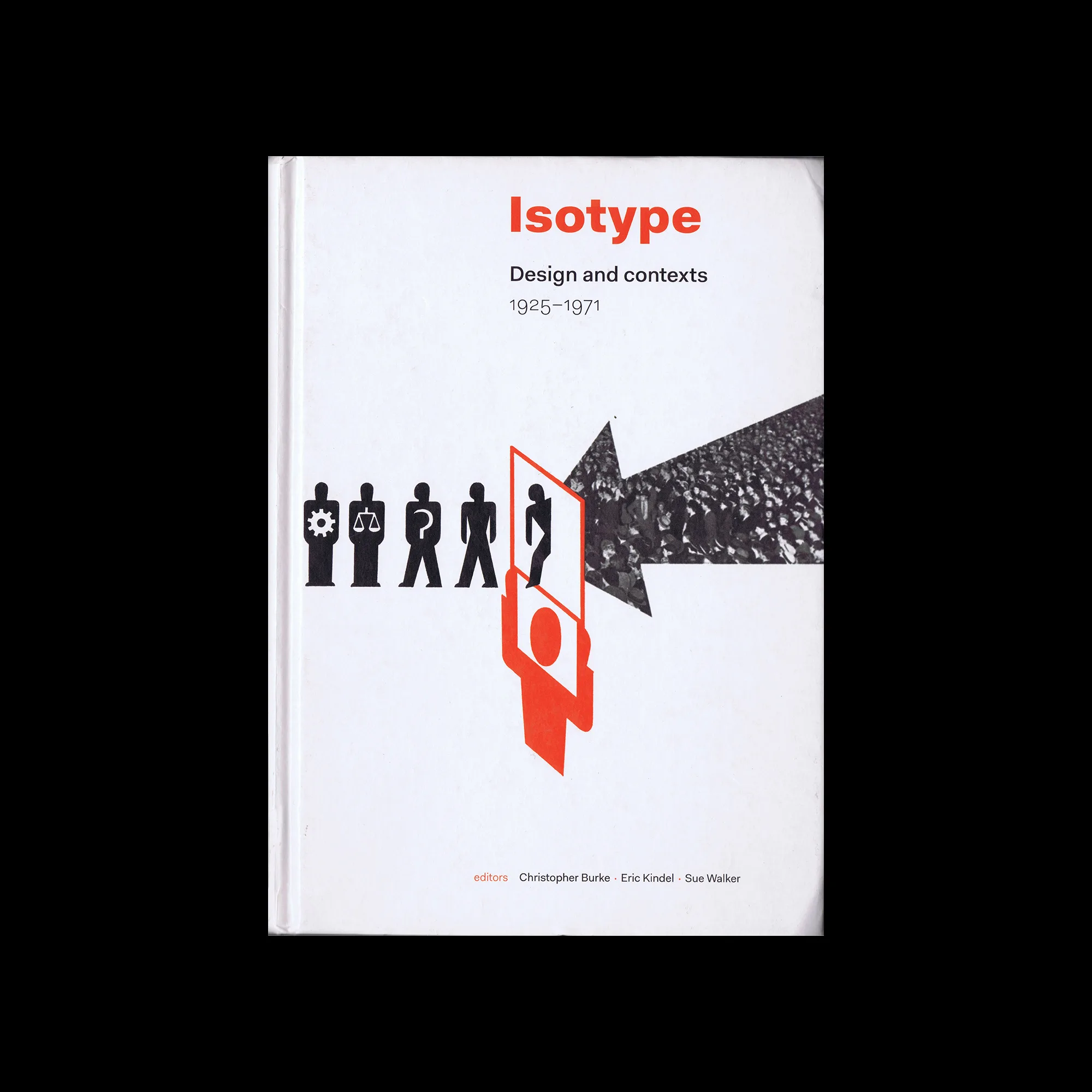

Christopher Burke, Eric Kindel, Sue Walker (editors)
“The work in graphic communication carried out by Otto Neurath and his associates now commonly known simply as Isotype has been the subject of much interest in recent years. Conceived and developed in the 1920s as the Vienna method of pictorial statistics , this approach to designing information had from its inception the power to grow and spread internationally. Political developments in Europe forced the issue, and production moved to the Netherlands (1934) and to England (1940), where the Isotype Institute continued to produce work until 1971. The Austrian, Dutch, and English years of Isotype are described here freshly and extensively. There are chapters on the notable extensions of Isotype to Soviet Russia, the USA, and Africa. Isotype work in film and in designing for children is fully documented and discussed. Between these main chapters the book presents interludes documenting Isotype production visually. Three appendices reprint key documents. In its international coverage and its extensions into the wider terrain of history, his book opens a new vista in graphic design. Christopher Burke, The Gesellschafts- und Wirtschaftsmuseum in Wien (Social and economic museum of Vienna), 1925 34 Robin Kinross, The graphic formation of Isotype, 1925 40 Benjamin Benus Figurative constructivism and sociological graphics Emma Minns, Picturing Soviet progress: Izostat, 1931 4 Hisayasu Ihara, Isotype in America: Otto Neurath and Rudolf Modley Christopher Burke, Animated Isotype on film, 1941 7 Sue Walker, Graphic explanation for children, 1944 7 Eric Kindel, Isotype in Africa, 1952 8 Christopher Burke, Pictogram design: Vienna and beyond Christopher Burke Appendices: Otto Neurath, Social and economic museum of Vienna , 1925 Marie Reidemeister, The modern hieroglyphic script , 1928 Marie Neurath, Social and economic museum of Vienna, 1925 34 “

Advertising Design, Design Archive Feature, Members Only Content
The collection of works I've gathered, designed for Olympia-Werke, showcases the height of mid-century German commercial artistry. The work was collated in a branded folder and contained forty brochures, advertisements and manuals.
Read Article
Advertising Design, Design Archive Feature, Members Only Content, Regional Histories
Pubblicità in Italia 1957-58 gathers the best advertising in Italy, showcases the diverse talents and styles and the clients who were commissioning and embracing modern design.
Read Article
Advertising Design, Design Archive Feature
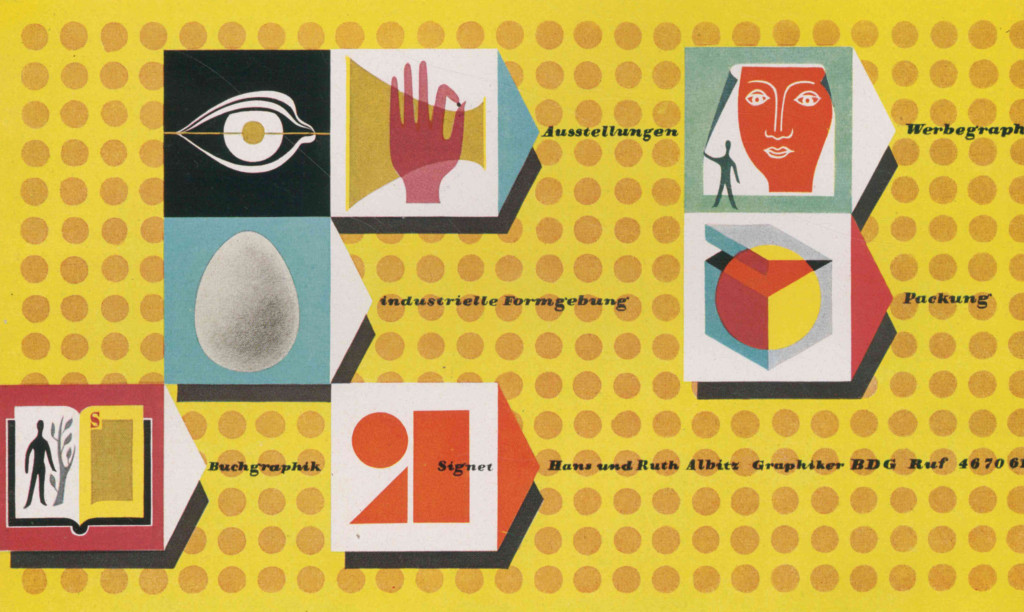
Among the young graphic artists of Berlin, who set to work after the war, Hans Adolf Albitz and Ruth Albitz-Geiß can claim special attention. In a short time, at a period when economic conditions were pretty unfavourable, they worked themselves so to the fore that their names came to mean something in Berlin publicity, and in western Germany their posters are known and appreciated, too.
Read Article