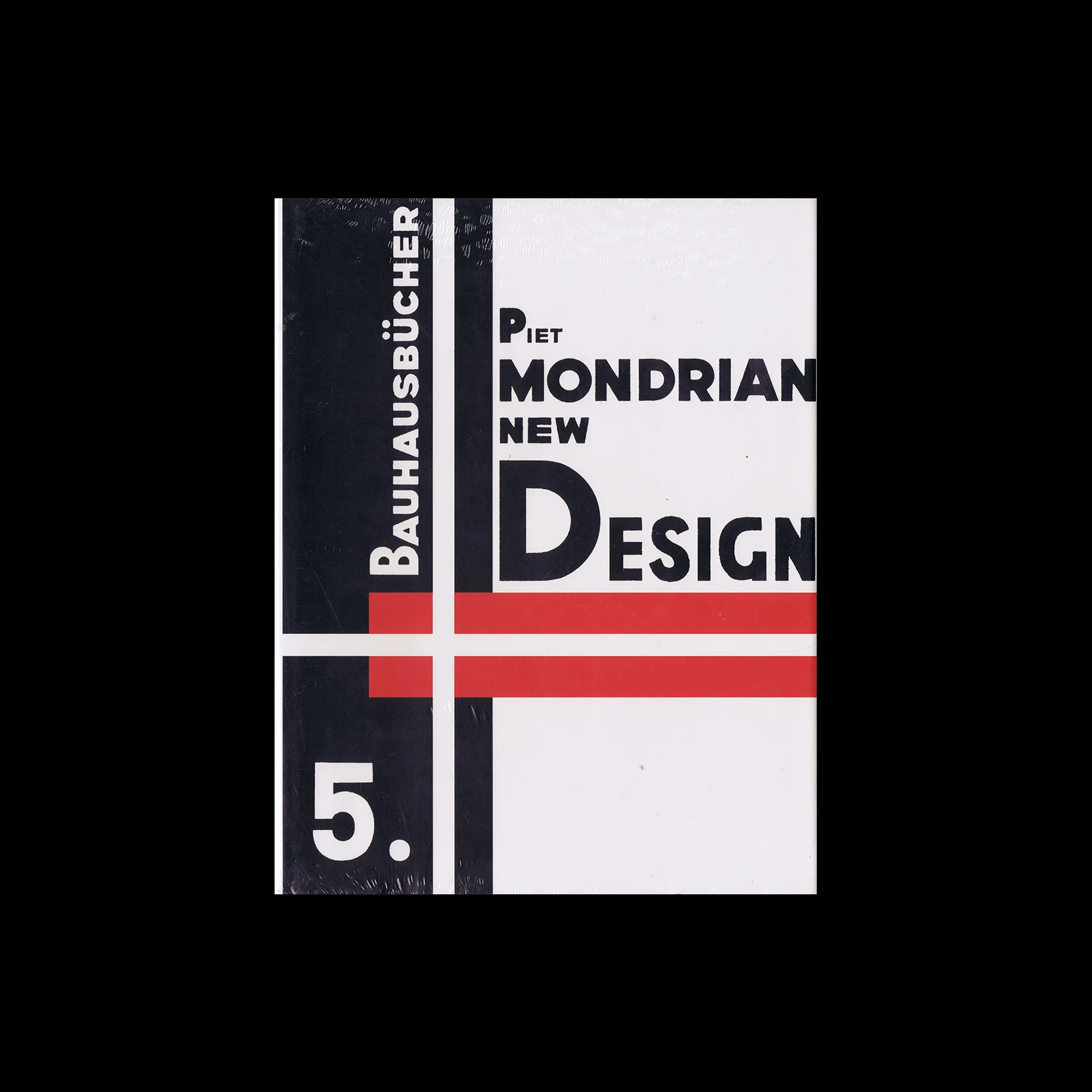

‘Although Piet Mondrian (1872–1944) was not an active member of the Bauhaus, his name is often mentioned in connection with the art school. Mondrian, co-founder of the De Stijl movement in the Netherlands, called for a strict reduction of visual language to orthogonal composition and primary colors, which met with great approval in Bauhaus circles. His rigorous geometric compositions of verticals and horizontals and strident palette of essential colors were important to numerous Bauhaus masters. Mondrian’s influence appeared in Bauhaus architecture, product design, typography, graphic design, painting and beyond. It is therefore not surprising that Mondrian’s essays on art theory, most of them written for the De Stijl journal, were translated into German and published as fifth volume of the Bauhausbücher series.’
Author(s): Piet Mondrian
Edited by Walter Gropius, László Moholy-Nagy (original series), Lars Müller (English edition) in collaboration with Bauhaus-Archiv / Museum für Gestaltung
Design: László Moholy-Nagy (original German edition)

From the graphic design archive:
Design Archive Feature, Designer Profiles, Members Only Content, Regional Histories
Yoshio Hayakawa was born in Osaka, Japan, in 1917 and became a leading designer and artist in postwar Japan. His work was a harmonisation of traditional Japanese art with Western art.
Read Article
Advertising Design, Design Archive Feature, Members Only Content
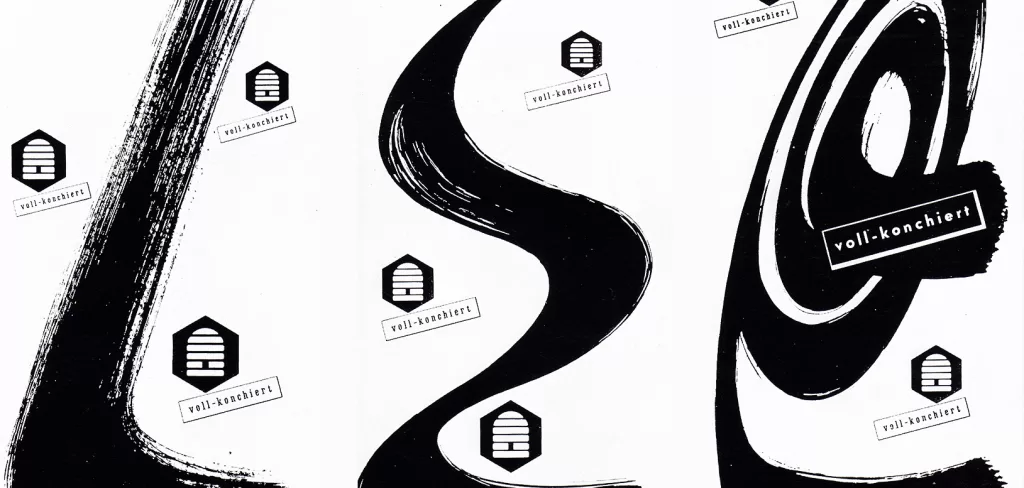
When perusing vintage publications, I often stumble upon forgotten or undocumented gems. In this article, I compare two remarkable advertisements designed for Sprengel Ltd byHerbert Zumpe and Karl Otto Goetz
Read Article
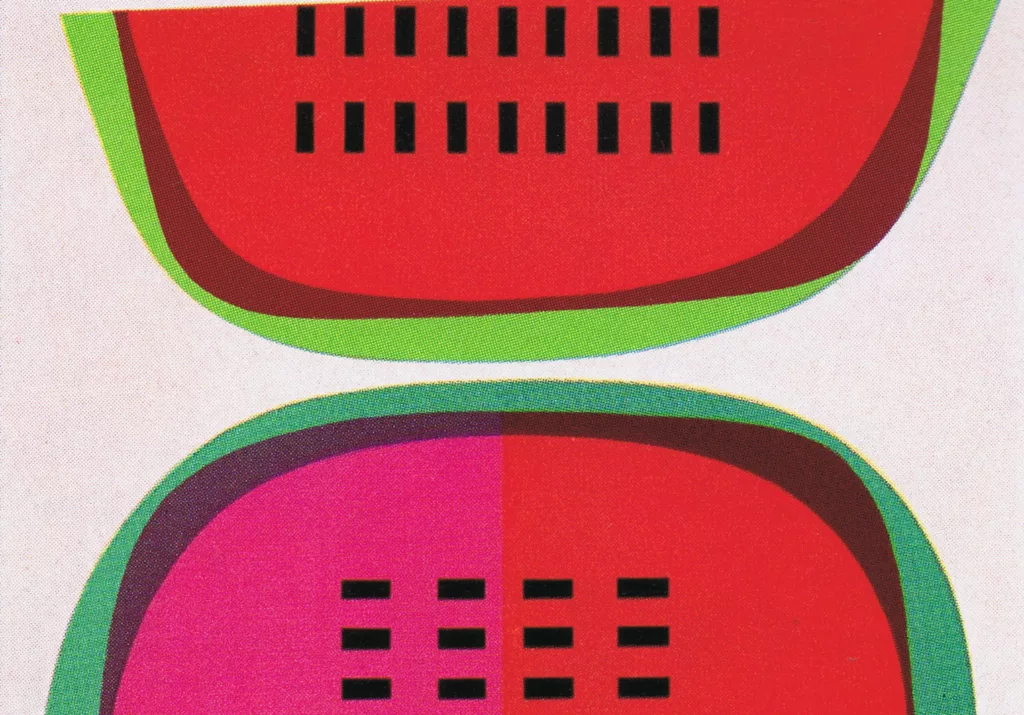
Design Archive Feature, Magazines & Publishing, Regional Histories
The covers of the periodical ALMANAQUE, which was published in Lisbon, are perfect examples of this pleasure in the unusual and the force of with which all sorts of foreign influences are assimilated.
Read Article