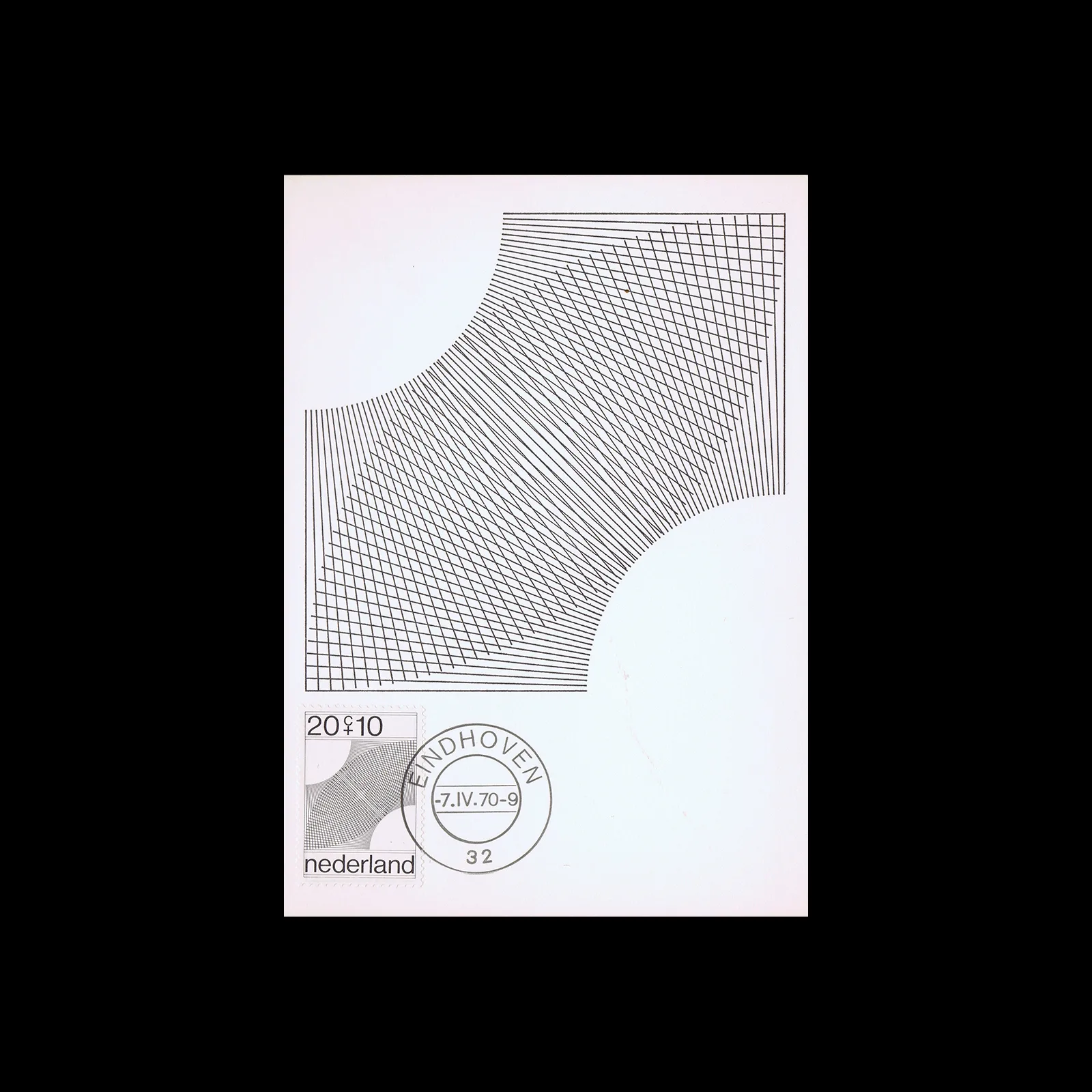

Social Welfare Funds, Netherlands Maxi Card (Light Grey), 1970

Details

Ootje Oxenaar
Robert Deddaat Emile ‘Ootje’ Oxenaar was born in 1929 in The Hague. His most recognised design work was his commission from De Nederlandsche Bank, where he designed a series of banknotes. Explore related designers including Dick Elffers and Wim Crouwel. See also Dutch Modernism, Dutch graphic design history, and Stamps.

Linked Information

Social Welfare Funds, Netherlands Maxi Card (Light Grey), 1970. Designed by Ootje Oxenaar
Part of a series of designs by Ootje Oxenaar for the Social Welfare Funds, Netherlands stamp series.
More graphic design artefacts
More graphic design history articles
Andy Warhol’s Commercial Art for Interiors Magazine

Advertising Design, Design Archive Feature, Magazines & Publishing, Members Only Content

Andy Warhol’s Commercial Art for Interiors Magazine

Before ascending to fame within the contemporary art scene, Warhol enjoyed a thriving career as a commercial artist. His illustration work was commissioned by various magazines, including The New Yorker, Vogue, and Harper's Bazaar.

Read Article
Volume launches the first major retrospective of American graphic design polymath and mid-century modernist master, Rudolph de Harak

Book Reviews & Press Releases

Volume launches the first major retrospective of American graphic design polymath and mid-century modernist master, Rudolph de Harak

In the ambitious new monograph Rational Simplicity: Rudolph de Harak, Graphic Designer, Volume shines a light on the complete arc of the exceptionally rich and varied career of Rudolph de Harak, showcasing his vibrant, graphic, formally brilliant work, which blazed a colourful trail through the middle decades of the twentieth century.

Read Article
Design after Capitalism: Transforming Design Today for an Equitable

Book Reviews & Press Releases

Design after Capitalism: Transforming Design Today for an Equitable

How design can transcend the logics, structures, and subjectivities of capitalism: a framework, theoretical grounding, and practical principles. A new book published by MIT Press written by Matthew Wizinsky.

Read Article