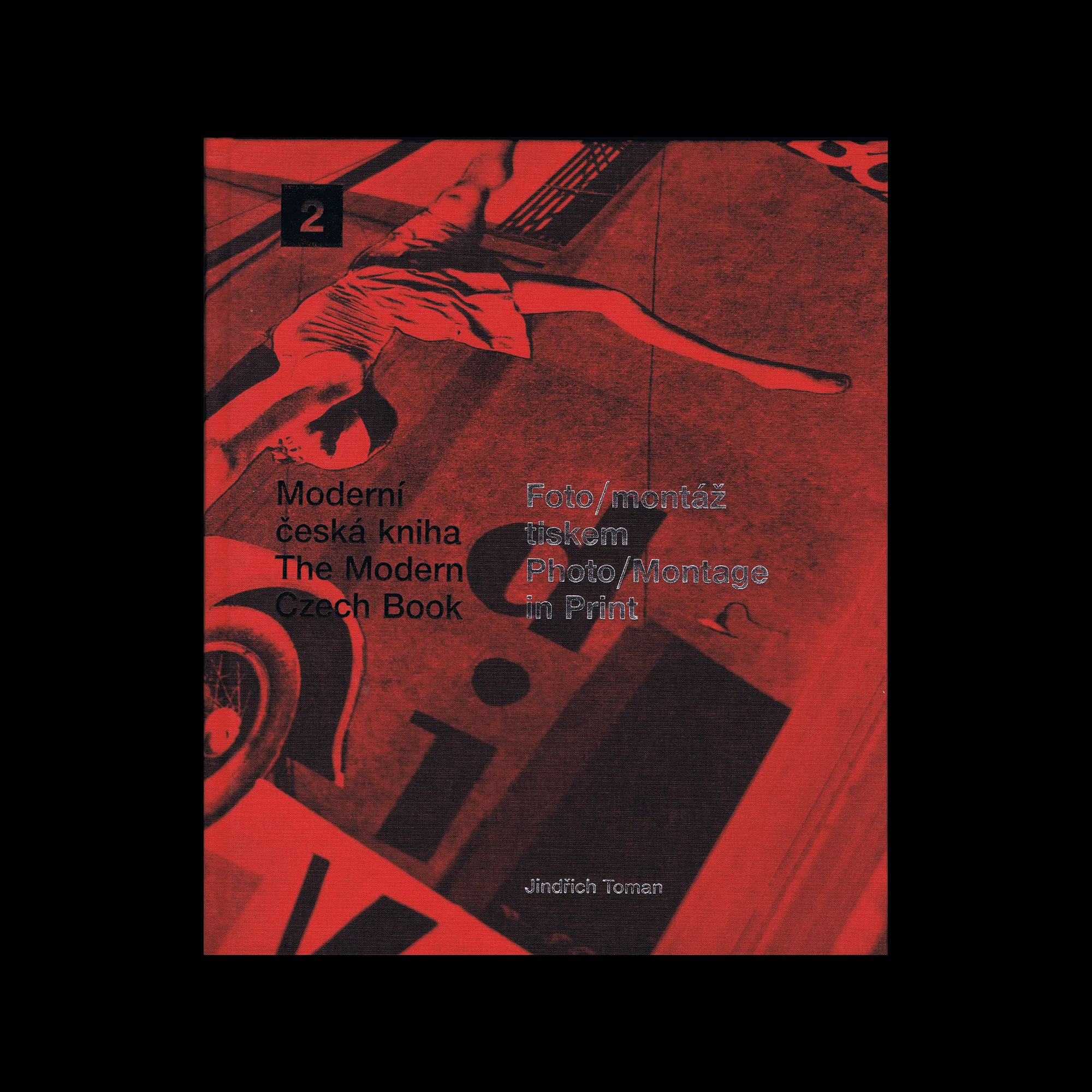

‘Photomontage was pioneered as a technique in central Europe in the 1910s, where it flourished as an art form through the end of World War II. While German artists such as John Heartfield, Max Ernst and Hannah Höch used the medium to respond to the atrocities of war, other areas of Europe were simultaneously experiencing a newfound political autonomy as the Austro-Hungarian Empire collapsed. For these artists, namely Polish and Czech, photomontage manifested itself in a Surrealist approach to cut-and-paste imagery that emphasized its potential for visual poetry. Photo/Montage in Print traces the explosion of photomontage art in book cover design and illustrated magazines in the interwar period. Documenting the remarkable contributions of Czech artists in the creation of the visual language of modern print media, the publication includes some of the leading artists of the Czech avant garde such as Karel Teige, Jindrich Styrsky, Toyen, Ladislav Sutnar and Frantisek Muzika.’

The most comprehensive account of ghost signs ever published, focusing on London’s hand-painted relics of advertising past
Read Article
Design Archive Feature, Members Only Content, Poster Design, Regional Histories
One of the main features in Gebrauchsgraphik 08, 1963 is focused on the 1962/63 annual poster awards in Germany. Over twenty posters were awarded by the Association of German Commercial Artists.
Read Article
Design Archive Feature, Members Only Content, Movements, Regional Histories
Japanese modern design was heavily influenced by European art movements, particularly modernism and the Bauhaus school. As Japan's advertising industry expanded, it increasingly drew from Western culture, especially television and film, resulting in designs that were eclectic, vibrant, and infused with modernist energy.
Read Article