
Total DesignWim Crouwel

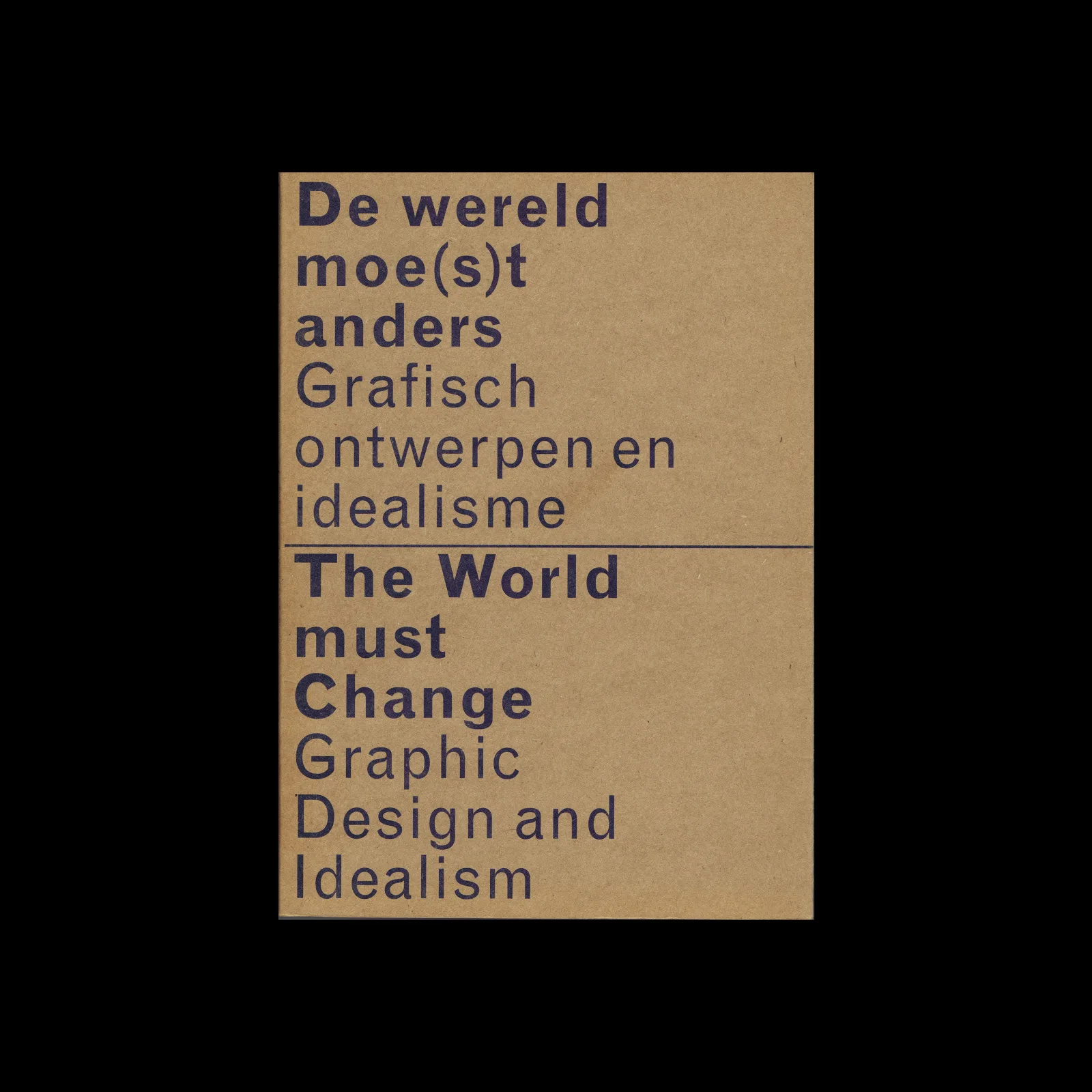
Victor Braunner, Stedelijk Museum, Amsterdam, 1965

Details

  • Format Exhibition Catalogue
  • Designer/s Wim Crouwel and Anneke Huig (Total Design)
  • Year 1965
  • Client/Publisher Stedelijk Museum, Amsterdam
  • Size 185mm x 275mm
Wim Crouwel and Anneke Huig (Total Design)
Total Design was founded in Amsterdam in 1963 by Wim Crouwel, Friso Kramer, Benno Wissing, and Paul and Dick Schwarz and was the first large-scale multidisciplinary design consultancy in the Netherlands. Under Crouwel's creative direction the studio developed a rigorous systematic approach rooted in grid systems and neutral typography. Its long-running relationship with the Stedelijk Museum Amsterdam produced catalogues, posters, and exhibition graphics that remain among the most influential bodies of institutional design in postwar Europe. Other major clients included the Dutch Post Office and Schiphol airport. The practice continues today as Total Identity. Explore designers associated with Total Design including Wim Crouwel, Jurriaan Schrofer, and Benno Wissing. See also Dutch Modernism, Dutch graphic design history, and 1960s graphic design history.
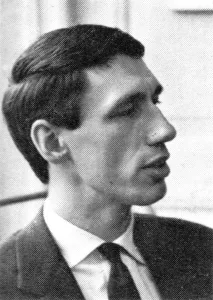
Willem Hendrik Crouwel was born in 1928 in Groningen, Netherlands. He studied at the Academy of Arts and Crafts in Groningen and took evening classes at the Institute of Arts and Crafts, now the Rietveld Academy. His teacher, Charles Jongejans, was trained by notable Dutch designers Paul Schuitema and Gerard Kiljan. In 1952, Crouwel began his design career at Enderberg, designing exhibitions and trade stands, gaining valuable experience. After leaving Enderberg in 1956, he founded a studio with industrial designer Kho Liang Ie, working on various projects across design disciplines, including graphic and exhibition design. Influenced by mid-century Swiss typography, Crouwel explored letterforms and graphic systems, using fonts like Helvetica and Univers. His early clients included the Van Abbe Museum, where he designed catalogues and posters. In 1963, he co-founded the influential design agency Total Design and also started working for the Stedelijk Museum, collaborating with Edy de Wilde until 1986. Explore the Design Reviewed archive to discover artefacts connected to Wim Crouwel. The Dutch Modernism movement, the Netherlands and the 1960s and 1970s decade pages.

Linked Information

Victor Braunner, Stedelijk Museum, Amsterdam, 1965 designed by Wim Crouwel and Anneke Huig (Total Design)
More graphic design artefacts
More graphic design history articles
Matthew Leibowitz. American Graphic Designer | 1918 – 1974

Design Archive Feature, Designer Profiles, Members Only Content, Regional Histories

Matthew Leibowitz. American Graphic Designer | 1918 – 1974

Matthew Leibowitz was born in Philadelphia in 1918 and was a pioneering American graphic designer known for his innovative use of typography, illustrations, and photography. Over his career, he worked with clients like IBM, AT&T, and Paramount Pictures, received over 150 international awards, and his designs are featured in the collections of major museums, including MoMA in New York and Paris.

Read Article
Jan Slothouber and William Graatsma’s Cubic Children’s Stamps of 1970.

Design Archive Feature, Members Only Content, Regional Histories

Jan Slothouber and William Graatsma’s Cubic Children’s Stamps of 1970.

The stamps for the 1970 editions were designed by Jan Slothouber and William Graatsma in collaboration with the Centre for Cubic Constructions (CCC) in Heerlen.  Every stamp displays a different corner point of the same block, highlighting eight distinct corner points, with four chosen for their unique identities.

Read Article
The Work of Bradbury Thompson for Westvaco Inspirations for Printers

Design Archive Feature, Members Only Content

The Work of Bradbury Thompson for Westvaco Inspirations for Printers

Westvaco Inspirations was founded in 1925 by the West Virginia Pulp and Paper Company. Bradbury Thompson’s produced approximately sixty issues, experimenting with typography, photography, and illustrations.

Read Article