

Modernist Graphic Design in Britain 1945–1980
Ian McLaren and Tony Pritchard
Chapter two of ‘Modernist Graphic Design in Britain 1945–1980’ focuses attention on the leading design schools of this period. This extract highlights the importance that the Central School of Arts and Crafts played in establishing the connection between design education and the emerging professional practice. An examination of those teaching and studying here during the late 1940s and early 1950s indicates the impact the participants were having on the evolution of what would become the design curriculum in many of the art schools that followed.
The Central School of Arts and Crafts
Art and design in Britain owes a great deal to William Johnstone. The son of a modest farmer on the Scottish borders, he came to London via Edinburgh, Paris and California. When appointed to principalship of the Central School of Arts and Crafts (the Central) during the late 1940s, he assembled a remarkable staff team. As a result, because of Johnstone’s enthusiasm and methods, during the immediate post-war period, the Central was without question the most dynamic art school in the country. Its department of Book Production, headed by Jesse Collins, was instrumental in assisting the development of many of the designers who played key roles in the evolution of the discipline, which became known as graphic design. Profiles of several of them are included later in Chapter 3.
William Johnstone
In his colourful autobiography, Johnstone describes how in Paris during the 1920s he mixed with such figures as Chagall, Giacommetti, Duchamp, L’Hôte, Poliakoff, Utrillo, and Zadkine.1 When ultimately he came to London he received constant support and encouragement from the Chief Art Inspector for the London County Council (LCC), RR Tomlinson (of whom more later). At the Regent Street Polytechnic (now part of the University of Westminster) Johnstone taught in the Craft School, where he was one of the first to help design cars. To give an idea of the period, he says “there was a growing feeling that, as the motor engine was really different from a horse, the design of a whole car should be different from, say, a hansom cab. It was a transitional period. The fashion was just beginning for the car body to slope away both in the front and at the back, the great idea being to get away as far as possible from the notion of a carriage on wheels”.
Johnstone’s first appointment as a Principal was at Hackney School of Art, which was a centre for evening classes. Here he found Richard Guyatt and Misha Black, both on the staff (of whom more later). He describes “the tremendous rush of students after the war”. This was due to the Ministry of Education having stipulated that places should be found to avoid the “recurrence of the disillusionment after the first World War.” With encouragement from Tomlinson he applied and was appointed to the principalship of Camberwell School of Art (now one of the colleges of the University of the Arts, London). He describes how he was advised that in order to inspire respect from parents he adopted a sober suit, black homburg hat, and carried an umbrella. Amongst the staff was Eric Fraser, who for many decades illustrated the Radio Times, usually in inventive scraper-board. One of the first appointments he made was Victor Pasmore, whom despite his limited qualifications at the time, he classed as having “exquisite taste. Every bit of colour he put together was sensitive”.2 It was here that he first encountered Jesse Collins.

Johnstone describes how London County Council’s Education Officer’s Department was virtually autonomous from national government. This was strengthened by the fact that the head of the London County Council Education Department, Herbert Morrison, “ruled London as an empire in itself…retaining only a polite link with the Ministry of Education”. He goes on to say “The Chief Art Inspector of the London County Council was superior in intelligence and judgement to his opposite number at the Ministry and would override the Ministry officials”. As a result, college principals in London were comparatively unfettered by national policy, and able to assert their personal stamp on institutions.3
European avant-garde influences
Evidently Johnstone was open to European avant-garde influences. In 1947 he was appointed at the Central. He adopted a policy of introducing painters into unexpected departments. The Fine Art staff included such figures as Robert Adams, Alan Davie, Anthony Gross, Richard Hamilton, Patrick Heron, Nigel Henderson, Roger Hilton, Paul Hogarth, Louis le Bocquay, Victor Pasmore, Eduardo Paolozzi, Mervyn Peake, William Roberts, William Turnbull and Keith Vaughan. Several of these (Hamilton, Henderson and Paolozzi) were members of the influential Independent Group, which met principally at the ICA. The architect Peter Smithson was also a member, and taught alongside Paolozzi. Reyner Banham was a member of the Art History staff. Geoff White recalls being taught at the Central by Victor Pasmore, Jesse Collins, Herbert Spencer and Anthony Froshaug. He believes the school very much followed the ethos of European Modernism and institutions such as the Bauhaus. The staff of the Furniture Design department included Robin Day, Frank Guille and Clive Latimer. The Architectural staff included numerous figures who became influential, such as Maxwell Fry, Jane Drew, Wells Coates, Denis Lansdun, Trevor Dannat, and the ex-students Peter and Alison Smithson.4 Johnstone claims it was he who recommended Drew and Coates to Le Corbusier, to work on Chandigarh.
Basic design courses
Johnstone was keen to introduce basic design throughout the School. Describing his experience at Camberwell, he says “In Britain during the 1930s basic design courses were started by Jesse Collins and Anthony Halliwell. While they were both influenced by Bauhaus teaching, they each brought new creative ideas to the subject”. Elsewhere, he describes how another Camberwell lecturer Edwin Straker introduced Pasmore to abstract painting (Straker worked in Halliwell’s department teaching basic design to ex-servicemen).5 Johnstone had a high opinion of Halliwell, having recruited him at Camberwell because he had been impressed by his work at Beckenham School of Art, where he had introduced basic design as early as 1933. Halliwell would have worked with Collins while teaching commercial art (ie graphic design). Johnstone suggests that it was due to Halliwell’s influence that Pasmore shifted from landscapes and cityscapes to abstract art, for which he is better known.6 During 1947, Halliwell was appointed in the School of Jewellery and Silversmithing and formed a course in Design for Light Industry. As a result, he and Johnstone were “at last able to put into effect those ideas we had dreamed about at Camberwell before the war”.7 They recruited Robert Adams, Bruce Archer, Nigel Henderson, and Robert Welch to the course.
He goes on to add that when he arrived, he was disappointed that Collins was not in charge of the School of Book Production. Collins was teaching only part-time, while also working with Misha Black and colleagues at Design Research Unit, which he opines “made a considerable impact on graphic design in this country” (see Chapter 5). While he admired Collins, Johnstone also respected the contribution made by previous members of the School of Book Production, such as Douglas Cockerell, Cobden-Sanderson, Eric Gill, Graily Hewitt, JH Mason and Edward Johnston. Several of whom had worked closely with both the Monotype Corporation, and Count Kessler’s Cranach Press in Weimar.

When ultimately able to appoint Collins as head of department, he describes him as “a splendid Head of his Department; he was also a fine and inspiring teacher who had, on occasion, a magnificent Irish temper”.8 They both had to engage in protracted negotiations with the print unions when seeking to introduce typographic design teaching to trade apprentices. Johnstone noted that “During the fifties, the very best students chose to study graphic design and typography rather than opt for the Fine Arts, which seemed to only attract third- or fourth-rate students”. He goes on to cite as examples of the former Colin Forbes, Herbert Spencer, George Daulby, Alan Fletcher, Peter Wildbur, Allan Ball, Derek Birdsall, Kenneth Garland, Peter Firmin and Mervyn Kurlansky. He continues by saying “That most excellent typographical designer Herbert Spencer told me once it was a very exciting place to be – the only place where there was an attempt to grapple with the real problems of industrial design”. This then was the environment in which many of the most inspiring designers during the post-war period met and interacted. We shall be profiling several of them later here
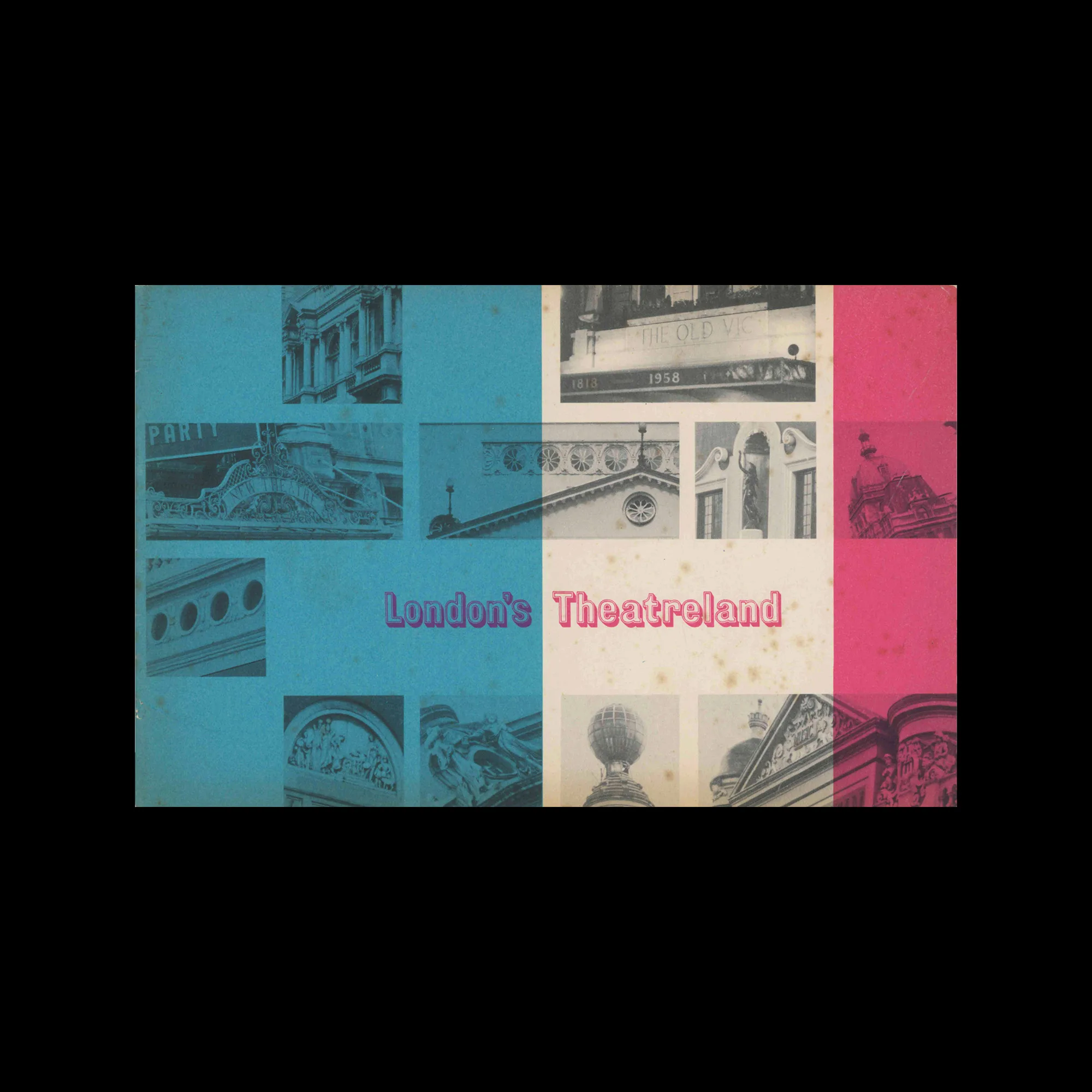
Post-war students
The country was experiencing a dynamic period with a vibrant socialist ethos. Many of the students were ex-servicemen returning with experience of serving overseas. Inevitably, they brought with them a greater maturity and a hunger for change more pronounced than with many undergraduate students today. One such was Ken Garland, who confirms that Johnstone was extremely good at identifying and bringing disparate staff together.9 As an example of the way in which Johnstone mixed staff from differing disciplines Ken cites Eduardo Paolozzi and Victor Pasmore, whom Johnstone insisted should teach basic design in the Textiles Department. He adds that Richard Hamilton, was “loquacious – ad nauseam”; and describes how students could “wander into” all departments. Geoff White confirms this, observing that he spent much of his own time in the Painting Department.
Of his time at the Central, Ken Garland says, “The atmosphere was enormously enthusiastic…We had a feeling that we were a generation of some significance…there was something to be done, there was a world to be made. It was definitely there, a feeling of building a new society”.10

The sentiment clearly was characteristic of many others. In Lucienne Roberts book ‘Drip-dry shirts..’ Colin Forbes says “I did my national service…got a grant…It was extraordinary; at the time, the Central was the place to be. William Johnstone, the principal, was an unreasonable, egotistical tyrant, but he really had a nose for talent”…11 “Reyner Banham, Henrion, Mervyn Peake, William Roberts, Eduardo Paolozzi were all brought in by Johnstone. Terence Conran, Alan Fletcher of course, Derek Birdsall were students – a new generation of designers came out of the Central”.12

Jesse Collins
In his book ‘Burning the Box of Beautiful Things’ Alex Seago attributes Collins success to the fact that “he was virtually unique amongst heads of British graphic design departments during the late 1940s because he was not an illustrator, a wood engraver, a calligrapher, or a printmaker, but a professional commercial graphic designer, one of the co-founders…of Design Research Unit.” He goes on to say “Collins was also unusual amongst contemporary British graphic designers in his appreciation of the modern movement in architecture, painting and design”.13 Robin Kinross’s account of Anthony Froshaug provides a very sympathetic account of Froshaug’s experience of having studied under Collins, and later working with him.14
Derek Birdsall says Collins; “was the kindest man and greatest teacher I have ever known (our youngest son is called after him). On my first day, he filled out my timetable in pencil on my index card. (I later realised that this timetable was written in pencil for a very good reason – if a class dropped below eight students, it was closed down. Students were sometimes asked to sit in classes dropping below eight to maintain them and the teachers – a benevolent conspiracy). After drafting my timetable Jesse said, “I’ll take you up to meet Mr Froshaug”.15

Ken Garland is on record as saying of Collins and Froshaug, “I suggest that their work in this department, notwithstanding the fact that Froshaug’s appointment lasted only for the two years 1952 and 1953,16 formed the true focus of teaching and thinking on graphic design in the vital five year period from 1951 to 1956; that it attracted the most forward looking and stimulating teachers on the subject”.17
He goes on to say, “Collins seems to have been as adept as Johnstone in attracting a stimulating group of staff, with complementary attitudes and skills”. Typical of these was Edward Wright. Ken Garland writes with enthusiasm about Wright‘s evening classes in experimental typography, which deserve “special mention”. He goes on to say “we used to have the most exciting fun pushing around large types, discarded halftones and anything that was type high, on an Albion Press under Wright’s benevolent and encouraging eye, saved (for a while, at least) from the outrage of the trade printers by the fact that we were doing our awful thing only in the evening, and by the authority of Anthony Froshaug, who waged god knows how many bitter battles with those narrow-minded little people on our behalf.”

“One marvellous aspect of those evenings was that many outsiders joined us there; Germano Facetti, an Italian trained as an architect who had arrived in Britain only two or so years before; Theo Crosby, an architect who launched ‘Uppercase’ magazine…Pat Crooke, an Architectural Association-trained architect; Don Hunstein, an American photographer; and Joseph Rykwert, a poet and art historian.”18 At the time, Theo Crosby was working for ‘Architectural Design’ and encountered Edward Wright when studying sculpture part-time. Robin Fior was another member of what must have been an animated group. Richard Hollis remembers Facetti being adept at picking the locks on equipment secured by the Printing staff, presumably having learnt the skill during his time in the Italian resistance.19
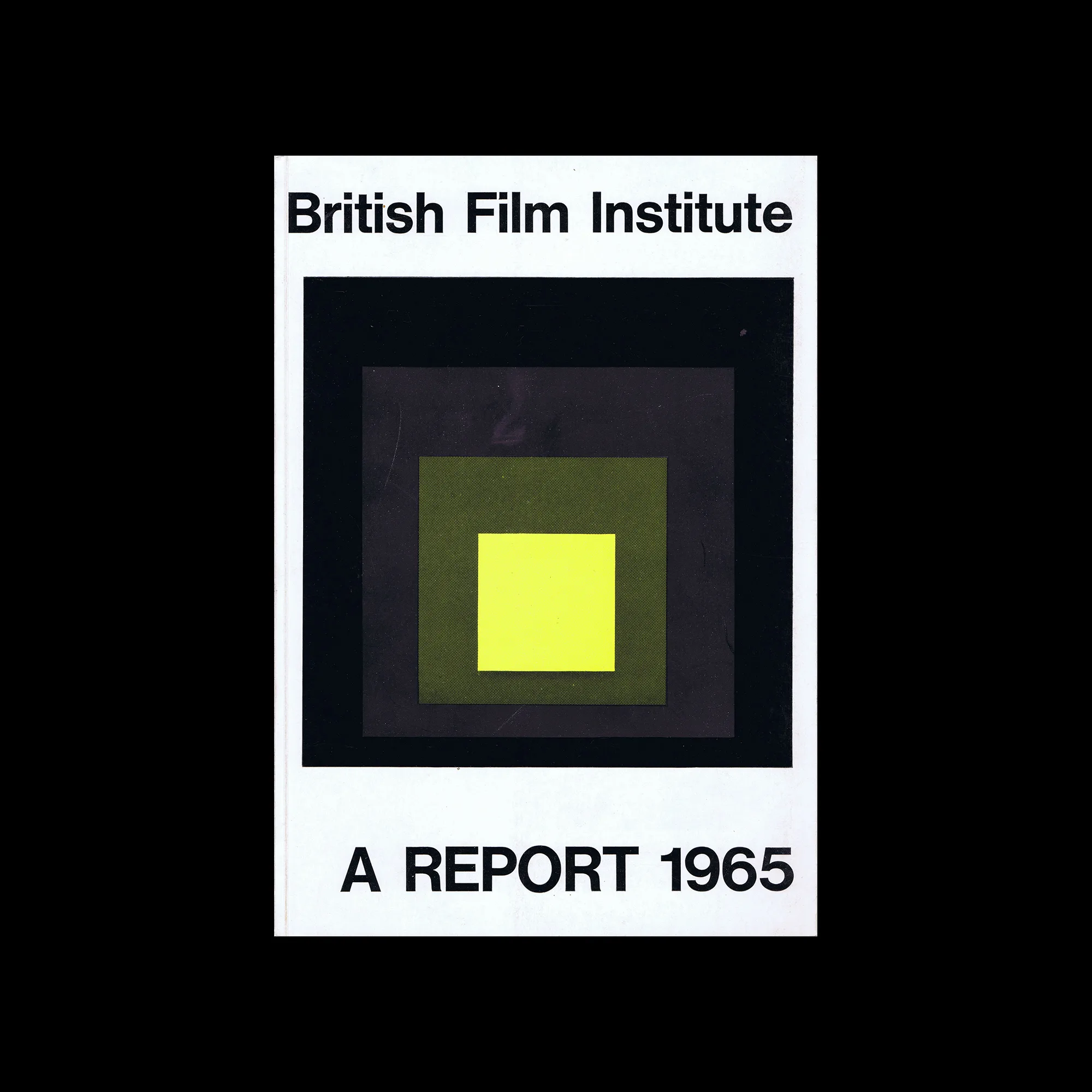
FHK Henrion influence on young graduates
Another figure who obtained his first teaching job in Collins’ department (in 1948) and later became well known was FHK Henrion.20 Subsequently, some ex-students returned to teach at the Central. They include George Daulby, Colin Forbes and Peter Wildbur. Both Margaret Calvert and Richard Hollis comment on George Daulby having made an impression on them.21 Several others went on soon afterwards to teach elsewhere, particularly at the London School of Printing and Graphic Arts. Many of Collins former students invigorated a later generation of designers through both their practice and teaching.

Photography
Strangely, photography does not appear to have been a prominent part of the curriculum of the graphic design course at the Central during this period. This is surprising, as the Reimann School had included an entire Photography Department, which included industrial and commercial photography as well as photo-journalism. The Reimann School had moved to London from Berlin during 1937, where it had been a much larger and prominent institution. The London school closed at the beginning of the war. It had included amongst its staff such figures as McKnight Kauffer, Eric Fraser, Milner Gray, Richard Hamilton and the documentary film maker John Grierson. Yasuko Suga completes her brief account of the school by featuring a project by Agatha Christie, who studied photography at the Riemann School.22
Moreover, Tschichold had written in both 1930 and 1931 in the British trade magazine ‘Commercial Art’ on the potential of photography in both print and exhibitions.23 His chapter in ‘Typographische Gestaltung’ on ‘Schrift und Foto’ (ie Type and Photo), with its wonderfully vivid examples, would have been known to both Collins and Froshaug. The latter would have known it well, as Robin Kinross’ includes a photograph of a room in Froshaug’s Cornish cottage during 1950 which shows a copy of Tschichold’s ‘berufsphotograph’ poster of 1938.24 Ken Garland describes how he discovered Nigel Henderson who “ran an unorthodox photography unit in a distant and largely overlooked corner of the Central School”.25 He recounts elsewhere that when Henderson recommended that he should study Moholy-Nagy, his response was “What is it?”.26 Geoff White refers to the photographic facilities being located within the Furniture Department, where they were used primarily not for their creative potential but for use in project reports and suchlike.

Attitude towards employment and the related profession
Collins was keen to assist his students in finding suitable employment. In the introduction to his book ‘notes on book design’ Derek Birdsall tells how “Jesse Collins sent me in a taxi with a job I had designed for one of the governors. As I got into the cab – one of the first I had ever taken – being 19 at the time – he said, ‘Remember that the client knows nothing of the work you have been doing during the last two weeks. Before showing him the job, take a minute or two – no more – to explain your approach. In that way, what he sees will not come as a surprise. It will be the natural outcome of your thinking’”. Similarly Ken Garland relates how Collins one day announced that he (Ken) was to be a magazine designer, and that he had arranged an interview for him with a potential employer.
Through his work in the department at the Central, it could be said that Jesse Collins was one of the most instrumental figures in Britain in developing graphic design as a concept. Johnstone observes that during his tenure he decided that the name of the department should be changed from ‘School of Book Production’ to ‘School of Book Production and Graphic Design’. He does not give a date for this, but the implication is that this took place during Collins’ tenure
Colin Forbes writes, “Jesse retired and Johnstone offered me the job of head of department in 1956 and I did that for three years”. He goes on to say, “I don’t think I was a particularly good head of department. I was at my best when I used to teach a typographic class, but teaching was not for me.”27
The Central continued to have an influence amongst former students, who for years continued to meet regularly on Friday evenings, at the The Lamb pub, in Lamb’s Conduit Street. More importantly, the relationships were manifest and varied between staff and students, staff and staff, and students and students. For example Colin Forbes and Alan Fletcher, and Theo Crosby were all students at the Central (though Colin and Alan may not have known Crosby at the time). Colin Forbes may have known Derek Birdsall similarly, though Colin may have been a member of staff when Derek was a student. Certainly, George Mayhew was a lecturer and invited former Central students Derek Birdsall, George Daulby and Peter Wildbur to establish BDMW.
Pre-order Modernist Graphic Design in Britain 1945–1980 here.


References
- See Johnstone 1980, pp147
- Ibid, pp182
- Ibid, pp143
- See Johnstone, 1980, pp250 and 278
- Ibid, pp203
- Ibid, pp205
- Ibid, pp239
- Ken Garland remembers him as a Welshman, interview 31.7.17.
- Ken Garland interview 31.7.17
- See Garland, in Roberts 2005, pp83
- See Roberts, 2005, pp110
- Ibid
- See Seago, 1995, pp21-22
- See Kinross, 2000, volume 2, pp99
- See Birdsall 2004, pp224
- Garland refers to Froshaug having first taught at the Central during 1947. See Garland 1996, pp69.
- See Garland, 1996, pp64
- Ibid, pp65
- Richard Hollis interview 28.9.17
- See Shaughnessy, 2013, pp74
- See Roberts 2005, pp155
- See Suga in Games N, 2017
- Tschichold J in ‘Commercial Art’ December 1930 and January 1931
- See Kinross, 200, pp77
- See Garland 1996, pp65
- See Seago 1995
- See Roberts 2005, pp118
Acknowledgement
The authors pay tribute to these leading pioneers. We would also like to thank Matt Lamont of the Design Reviewed archive in providing the images.


