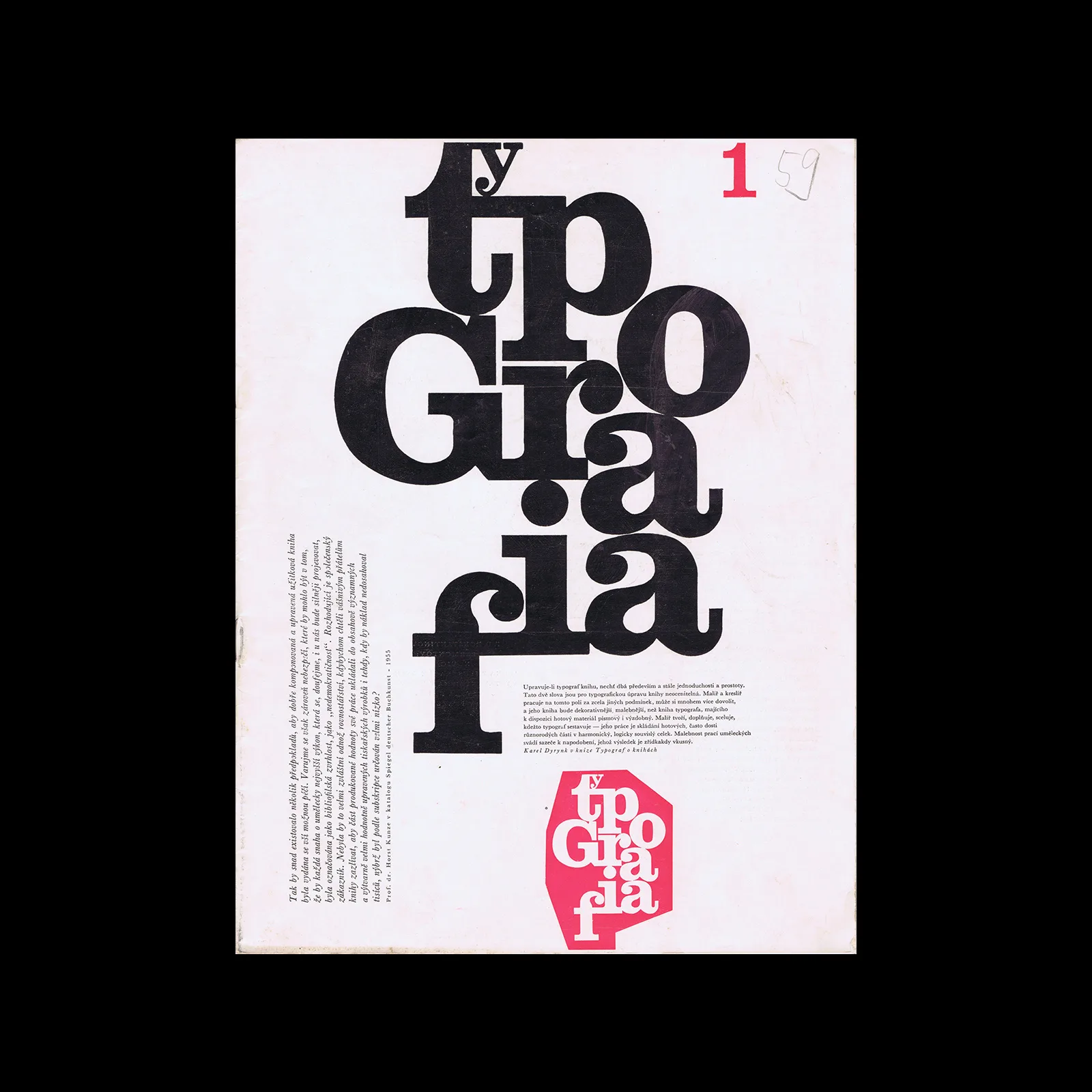

Oldřich Hlavsa

Typografia, ročník 56, 12, 1953

Details

Oldřich Hlavsa
Oldřich Hlavsa worked primarily in publication design and typography and played a major part in Czech graphic design history. He designed over 2000 book covers and published a series of his own books related to typography. Explore related designers including Ladislav Sutnar and Karel Teige. See also Czech graphic design history, Magazines, and 1950s graphic design history.
Typografia
Typografia is a Czech typography and printing journal featuring technical articles and historic design. The magazine was first released in 1888 in Prague.

Linked Information

Typografia, ročník 56, 12, 1953. Cover design by Oldřich Hlavsa
More graphic design artefacts
More graphic design history articles
Industrial Advertisements. A selection of works from the book, Swiss Industrial Graphic Design

Advertising Design, Design Archive Feature, Members Only Content, Regional Histories

Industrial Advertisements. A selection of works from the book, Swiss Industrial Graphic Design

A short essay and scanned advertising from Swiss Industrial Graphic Design. A rare book focused on effective industrial promotion authored by Hans Neuburg. The design of the book is credited to Hans Neuburg and Walter Bangerter.

Read Article

The Logos and Symbols of Brazilian Designer, Aloísio Magalhães

Corporate Identity & Branding, Design Archive Feature, Members Only Content, Typography & Type Design

The Logos and Symbols of Brazilian Designer, Aloísio Magalhães

Magalhães developed over 180 brands and in addition to developing visual identities, he also developed designs for Brazilian notes and coins.

Read Article
A Collection of Japanese Ephemera from the 1930s and 1940s

Design Archive Feature, Ephemera, Members Only Content, Regional Histories

A Collection of Japanese Ephemera from the 1930s and 1940s

Beyond being mere artefacts of design, these examples of Japanese Ephemera show the dynamic changes Japan was undergoing during this period. The design output of this era not only served commercial purposes but also became a powerful medium for expressing these societal shifts.

Read Article