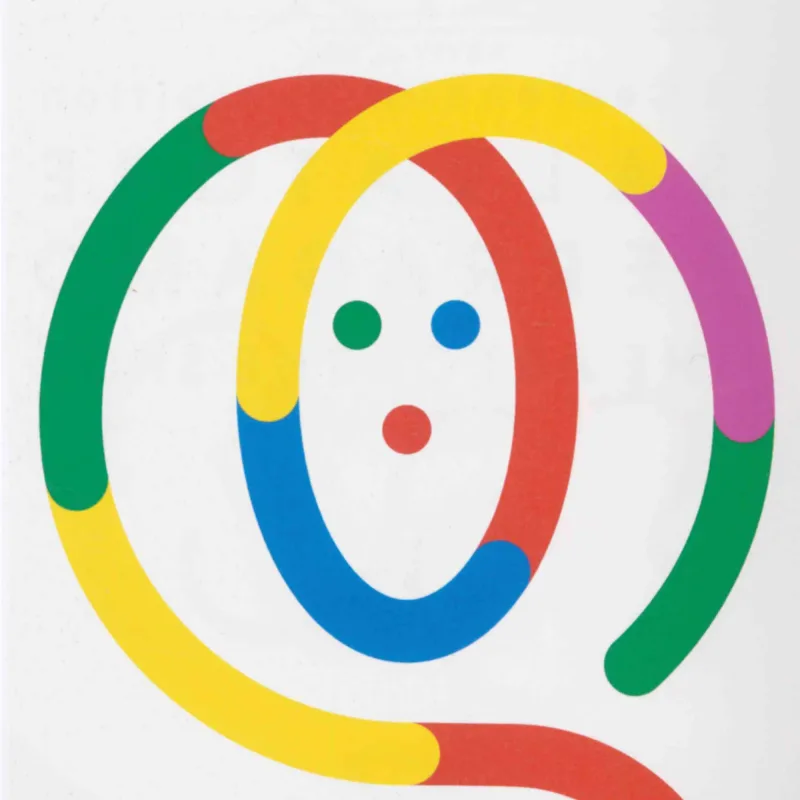
Designer Friday — Erik Nitsche, Swiss-American Designer, 1908–1998

DESIGNER FRIDAY

Erik Nitsche, Swiss-American Designer, 1908–1998

Issue: 16
The designer who visualised the atomic age.

Share:

Born: 1908
Died: 1998
Nationality: Swiss-American

Erik Nitsche studied at the Collège Classique in Lausanne and the Kunstgewerbeschule in Munich before working in Paris with Maximilien Vox and the printing firm Draeger Frères.

After moving to New York in 1934, he became art director for Saks Fifth Avenue and worked with Bloomingdale’s, Macy’s and Ohrbach’s. His advertising clients included Douglas Aircraft, Scandinavian Airlines and RCA Victor, for whom he art-directed Record Review.

In 1947, Nitsche was appointed vice president of Dorland International, overseeing art and industrial design. He later worked with Filene’s, the Museum of Modern Art, 20th Century Fox and Decca Records.

His relationship with General Dynamics began in 1953. Two years later, he created Atoms for Peace, a landmark series of posters presenting atomic energy through abstraction, brilliant colour and scientific imagery, produced for the 1955 International Conference on the Peaceful Uses of Atomic Energy in Geneva.

Gebrauchsgraphik, 4, 1956. Cover design by Eric Nitsche
Gebrauchsgraphik, 6, 1961. Cover design by Erik Nitsche
A History of Communication, Leisure Arts Limited, 1964. Designed by Erik Nitsche
History of Physics, Leisure Arts Limited, 1964. Designed by Erik Nitsche
Fortune magazine, Vol. 49, No. 2, 1954. Cover design by Erik Nitsche
Dynamic America: A History of General Dynamics Corporation and Its Predecessor Companies, 1960. Book designed by Erik Nitsche
Erik Nitsche

Erik Nitsche

Erik Nitsche studied at the Collège Classique in Lausanne, the Kunstgewerbeschule in Munich under Professor Ehmcke, and in Paris with Maximilien Vox. He worked with the printing firm Draeger Frères in Paris from 1929 to 1932 before freelancing and moving to New York in 1934. There, he became art director for Saks Fifth Avenue and worked with Bloomingdale's, Macy's, and Ohrbach's, while overseeing ad campaigns for Douglas Aircraft, Scandinavian Airlines, and RCA Victor's Record Review. In 1947, he was named vice president of Dorland International, handling art and industrial design. Nitsche later redesigned advertising for Filene's, worked with the Museum of Modern Art, and led campaigns for 20th Century Fox and Decca Records. In 1953, he became a consultant for General Dynamics, designing the Atoms for Peace campaign in 1955.

Explore related designers including Josef Müller-Brockmann and Armin Hofmann. See also International Typographic Style and Swiss graphic design history.

More info about Erik Nitsche

Related Items from the Archive
More graphic design history articles

Members Content

Bob Salpeter was trained by Paul Rand at IBM and educated in New York, at the School of Visual Arts and the School of Industrial Art. Salpeter went on to build an extensive and impressive career working with clients such as the American Museum of Natural History, the World Golf Hall of Fame, the American Cancer Society, Scott Printing and IBM.

Members Content

Ikko Tanaka (田中一光, 1930–2002) was a celebrated Japanese graphic designer. His client list included Mazda, Hanae Mori and Issey Miyake, Expo '85 in Tsukuba, World City Expo Tokyo '96, and the Victoria and Albert Museum.

Members Content

From Jugend and Ver Sacrum to Penrose Annual, an essay on design movements, shaping modernism, and early graphic design.

Members Content

Ryuichi Yamashiro (山城隆)  was a Japanese graphic designer and artist, born in Osaka in 1920. He belonged to the same generation of pioneering Japanese designers as Kohei Sugiura, Kiyoshi Awazu, Yoshio Hayakawa, Yūsaku Kamekura, Kazumasa Nagai, and Ikko Tanaka.