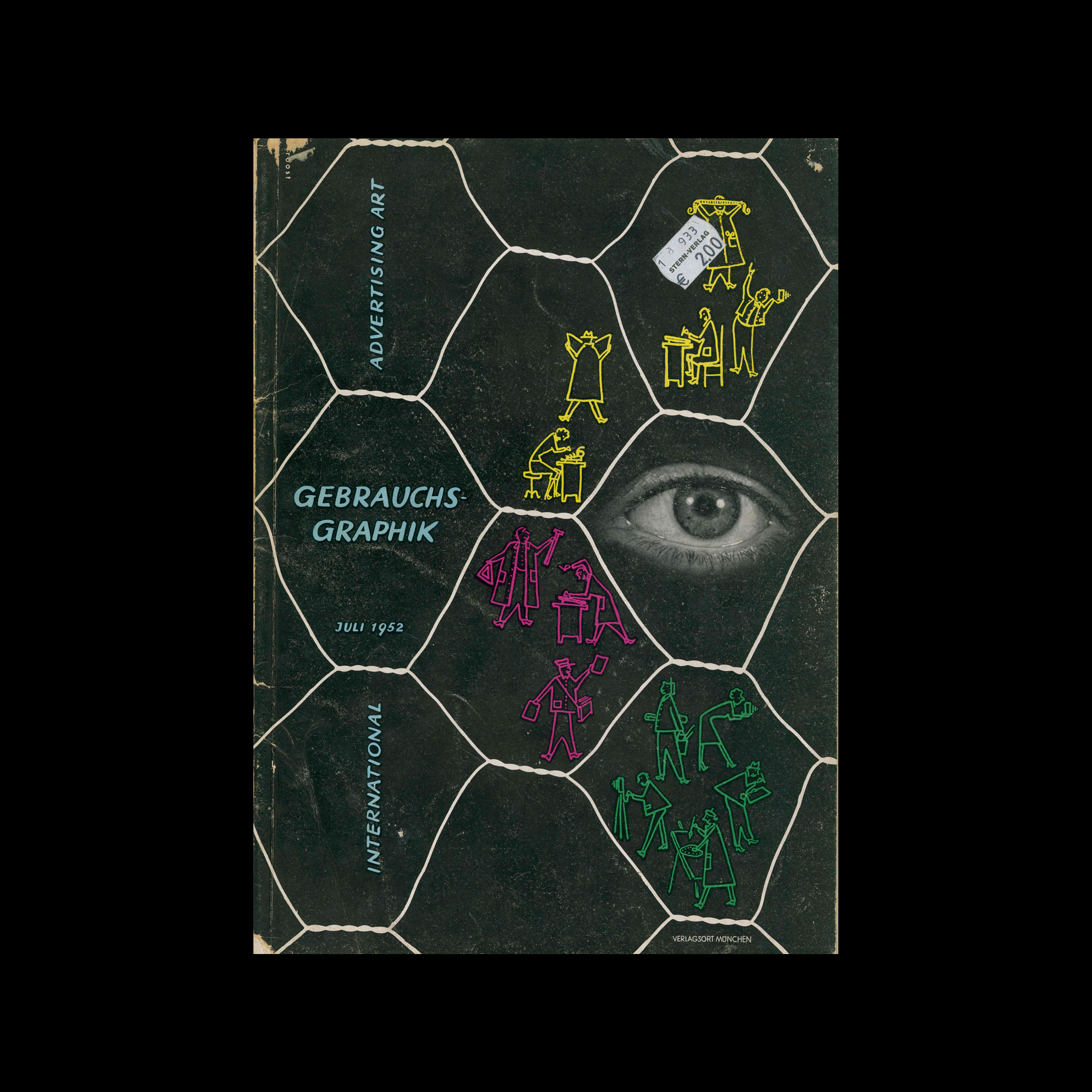

Gebrauchsgraphik, 07, 1952

Content includes:
Max Körner: A selection of German posters of 1951
Eberhard Hölscher: Propagandizing wrapping papers
Ludwig Ebenhöh: The topical page
Anton Sailer: Hans Renner
Alfredo Gellhorn: Valerian Guillard, Argentinien
Anton Sailer: Woodcuts for the Song of Solomon
Ludwig Ebenhöh: Palitzsch-Berger
Eberhard Hölscher: Sascha Klingelhöfer
Kaspar Strick: Kenji Ito’s Japanese graphic publicity
Anton Sailer: Nick Knatterton
Neue Drucktypen der Lettergieterij « Amsterdam»

Details

Gebrauchsgraphik
A German design magazine published from 1924 onwards, devoted to commercial art and advertising design.

Linked Information

Gebrauchsgraphik, 6, 1952
Gebrauchsgraphik, 07, 1952
More graphic design artefacts
More graphic design history articles
Women Graphic Designers in 1980s America

Advertising Design, Design Archive Feature, Members Only Content, Regional Histories

Women Graphic Designers in 1980s America

This article is part of my ongoing effort to spotlight the unsung heroes of design history. I'm especially passionate about sharing voices and designs that have been overlooked or forgotten. In this piece, I focus on the work of 1980s American graphic designers, in particular, the women who broke boundaries and shaped American visual culture.

Read Article
Stamps, Dick Bruna and the Making of Miffy

Design Archive Feature, Designer Profiles, Ephemera, Illustration, Members Only Content

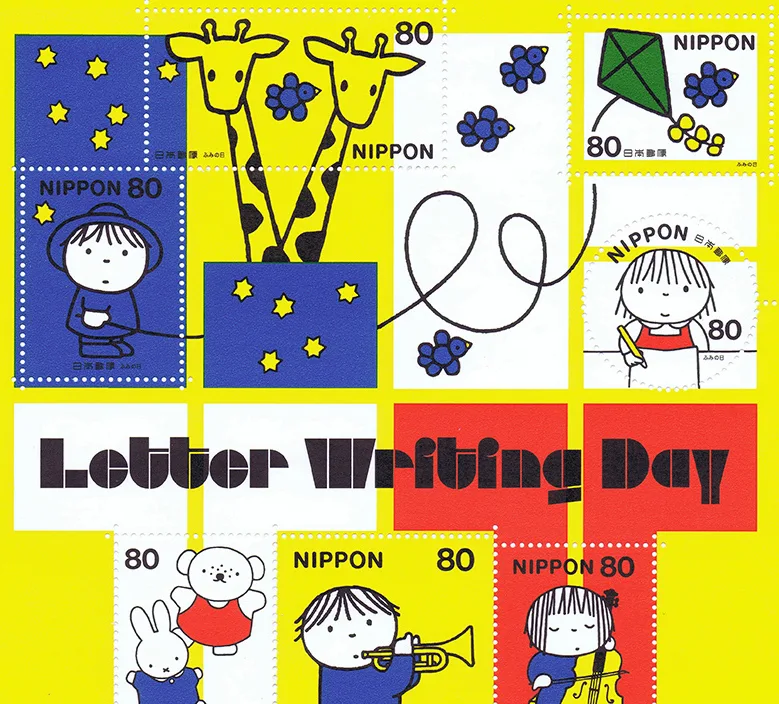
Stamps, Dick Bruna and the Making of Miffy

Beyond his books, Dick Bruna's vivid colour and simplified forms found their way onto posters, packaging, murals and stamps, many of which feature in my growing collection.

Read Article
Volume launches the first major retrospective of American graphic design polymath and mid-century modernist master, Rudolph de Harak

Book Reviews & Press Releases

Volume launches the first major retrospective of American graphic design polymath and mid-century modernist master, Rudolph de Harak

In the ambitious new monograph Rational Simplicity: Rudolph de Harak, Graphic Designer, Volume shines a light on the complete arc of the exceptionally rich and varied career of Rudolph de Harak, showcasing his vibrant, graphic, formally brilliant work, which blazed a colourful trail through the middle decades of the twentieth century.

Read Article